Merchant onboarding
Account registration and evidence collection for individual sellers, household businesses and companies.
- Business-model routing
- Identity and business documents
- Service agreement
An original product screenExplore / play / keep going ↘
Market context / Vietnam, 2022–2023
28%
of in-store payment value ran on cardsPayment value. Worldpay, Vietnam POS mix 2023
42%
of surveyed Vietnamese SMBs accepted themMerchant acceptance. Visa survey, fieldwork Sep–Oct 2023, n=350, weighted to micro businesses
75% of the same shops already took some digital payment. Taking a digital payment and accepting a card were different capabilities. These figures describe different populations, not a percentage-point gap.
Why not
This sequence illustrates a conventional POS setup. Routes varied by acquirer, and digital onboarding was already emerging during the engagement.
Chuẩn bị hồ sơ
Gather the file
Business registration, the representative's ID, proof of address, bank account, and four photographs of the shop: frontage, products, counter.
Làm việc với ngân hàng
Go to the bank
Copies certified, or originals carried in for comparison. Some acquirers required opening an account with them first.
Thẩm định
Underwriting
The acquirer assesses the merchant. Nothing the shop owner can do but wait.
Ký hợp đồng
Sign the contract
On paper, in person.
Lắp đặt thiết bị
Terminal installed
Staff visit the shop, install the POS terminal and train whoever will use it. Only now can a card be taken.
Paperwork → review → activationIllustrative sequence, not a measured Paykit baseline.
The brief I designed against
Make card acceptance accessible through the app.turn a process of paperwork, coordination and days into an activation that finishes inside the app.
That is the whole product thesis, and it sets the constraint for every screen after it: the required information needs a clear place in the app, with the right tasks for each merchant model.
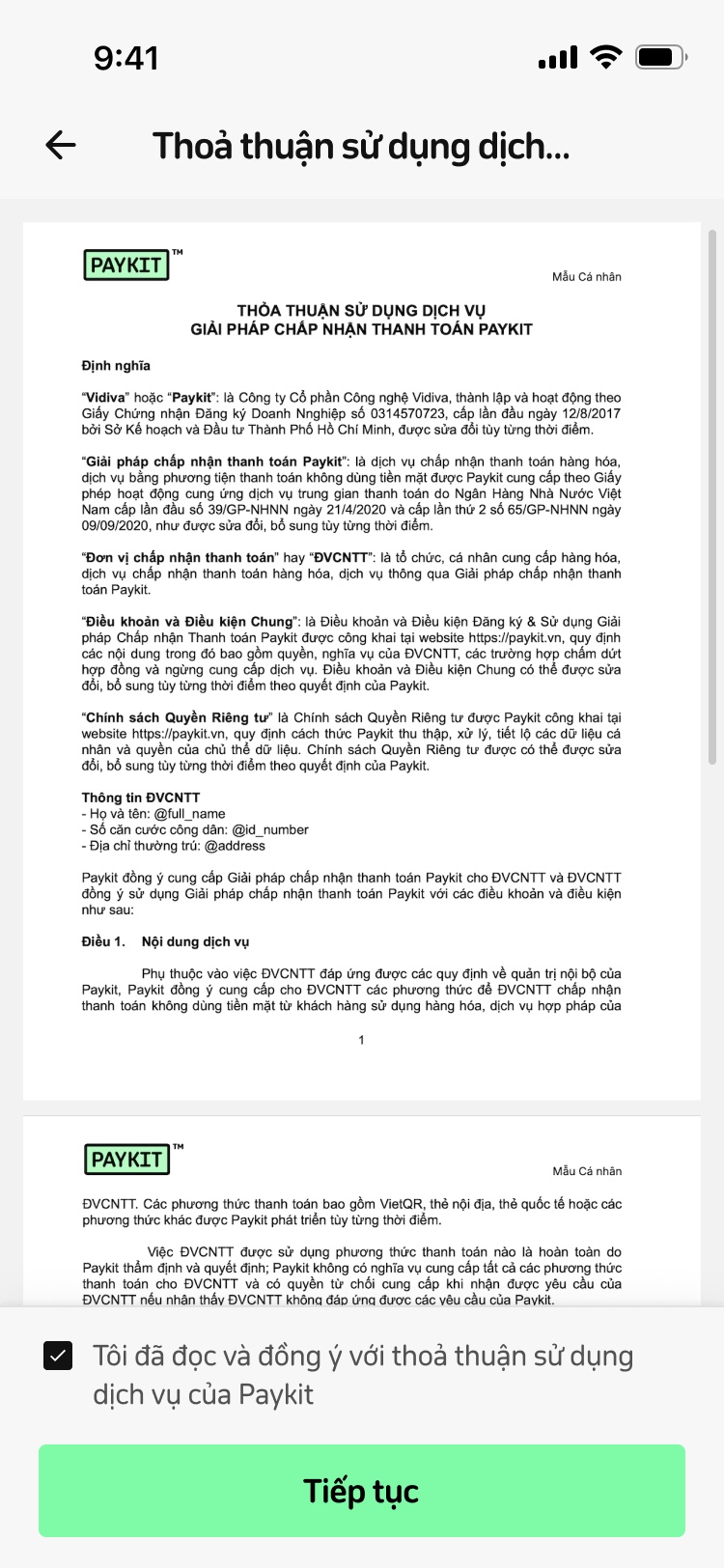
Tôi đã đọc và đồng ý
Tiếp tục
Tiếp tục
Xác nhận
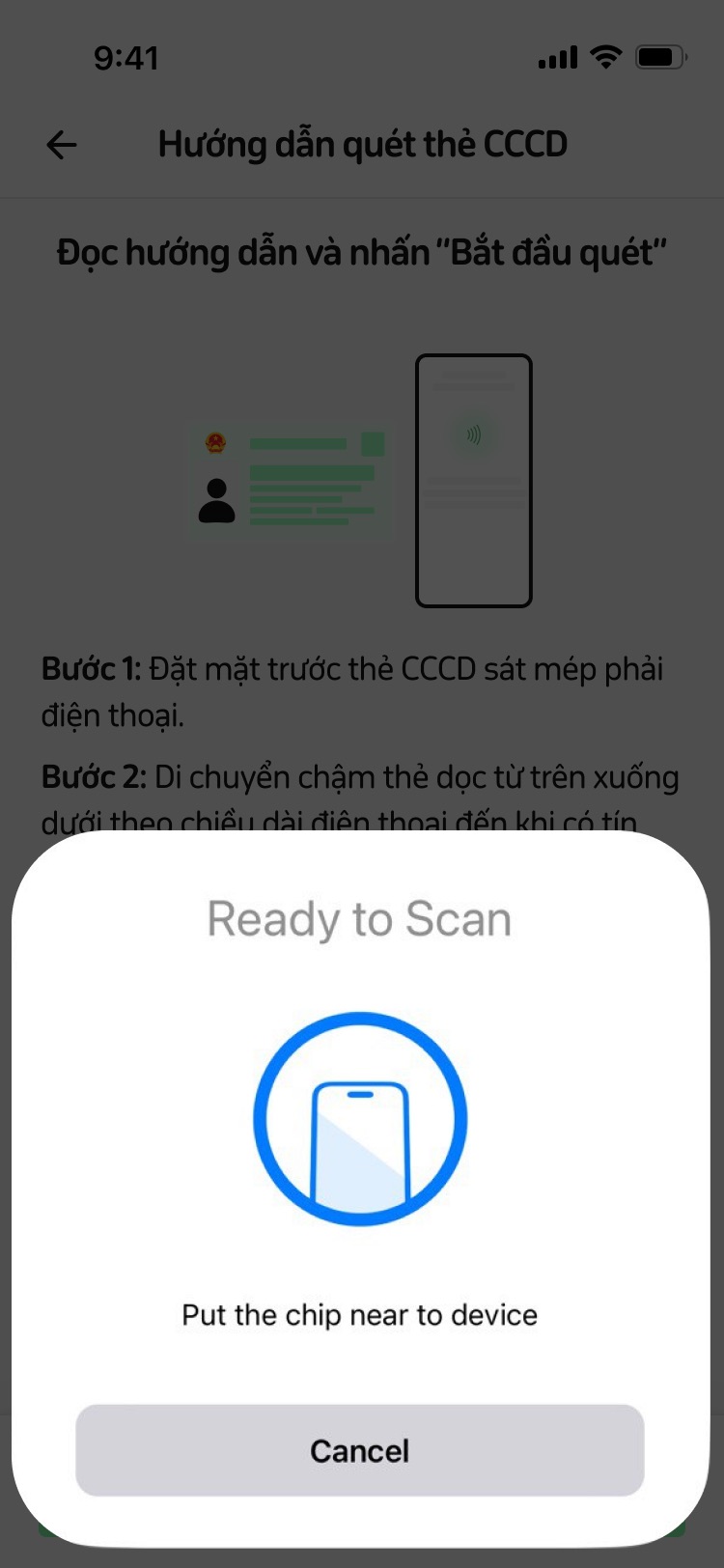
Giữ căn cước sát mặt sau điện thoại
Đang đọc chip…
Đưa khuôn mặt vào khung hìnhNhìn thẳng vào cameraGiữ yên để hoàn tất xác minhVui lòng không đeo kính đen
Xác minh sinh trắc học
Tên cửa hàng
Tạp hoá Bình Minh
Ngành nghề
Tiếp tục
Ký bằng khuôn mặt
Ký thoả thuận
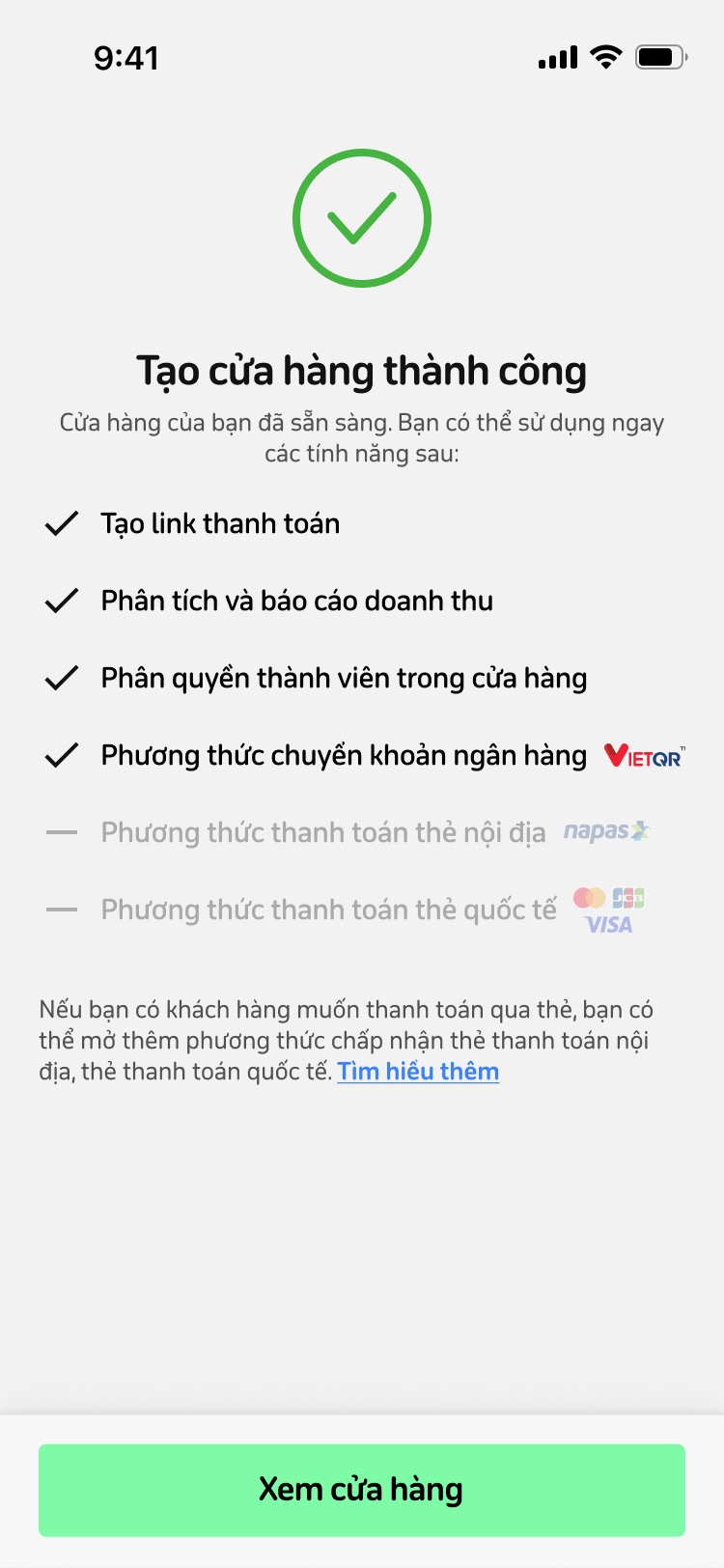
Tạo cửa hàng thành công
Cửa hàng đã sẵn sàng nhận thanh toán thẻ
Xem cửa hàng
Step 01 / 8 · read · Chính sách chung
The merchant agrees to the general policy first. Putting it at the front means nobody assembles a file and then discovers the terms.
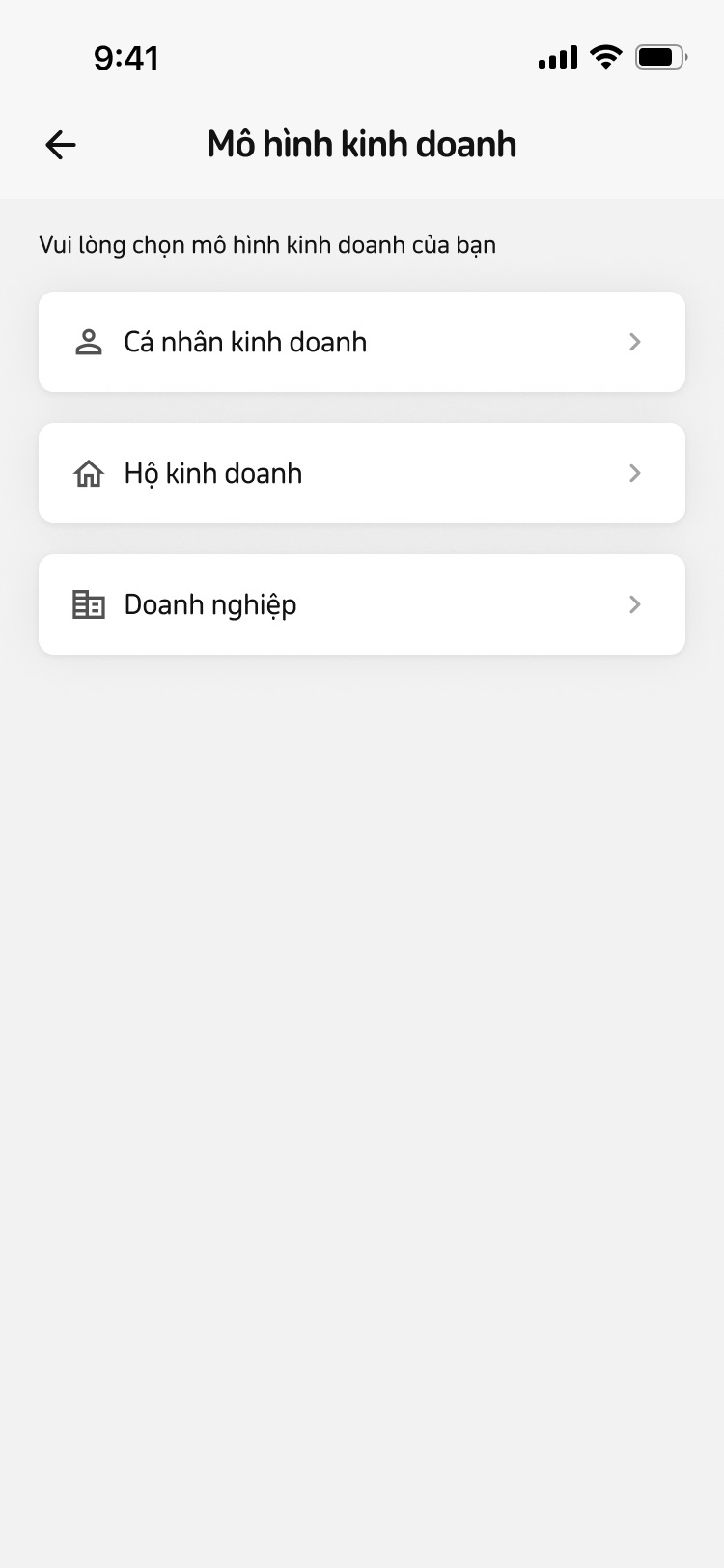
Step 02 / 8 · choose · Mô hình kinh doanh
Individual seller, household business, or company. The answer sets which evidence regulation will ask for — so it is asked once, at the start, instead of being inferred later.
Step 03 / 8 · prove · Giấy phép kinh doanh
OCR reads the registration certificate and fills the form. The merchant's job becomes correcting a machine rather than transcribing a document — and an individual seller never sees this step at all.
Step 04 / 8 · prove · Xác thực căn cước
The ID is held against the phone and the chip is read over NFC. The data is signed by the issuer, so it cannot be a photograph of someone else's card.
Step 05 / 8 · prove · Xác thực khuôn mặt
The face is checked against the portrait the chip returned. Every rejection names its own cause — too dark, not centred, wearing sunglasses — because a biometric step that fails silently is a step people abandon.
Step 06 / 8 · prove · Thông tin cửa hàng
Name, category, address. This is the merchant describing their business rather than proving their identity, and it is deliberately the last thing asked.
Step 07 / 8 · prove · Thoả thuận sử dụng dịch vụ
The service agreement is read to the end, then signed with the same facial verification used in step five. No printing, no scanning, no waiting for a courier.
Step 08 / 8 · done · Tạo cửa hàng thành công
A payment link, a QR, a card. The agreement follows by email so the merchant has their own copy of what they signed.
Same flow, three shapes
Each merchant only ever sees what regulation asks of them. Switch models, then untick the checkbox.
Cá nhân kinh doanhIndividual seller
Thông tin định danh
Thông tin cửa hàng
Gửi đăng ký
Hộ kinh doanhHousehold business
Giấy đăng ký kinh doanh
Thông tin chủ hộ
Thông tin cửa hàng
Gửi đăng ký
Doanh nghiệpCompany
Chứng nhận đăng ký kinh doanh
Người đại diện pháp luật
Giám đốc / Tổng giám đốc
Người đại diện kiêm luôn vai trò này
Kế toán trưởng / Phụ trách kế toán
Thông tin cửa hàng
Chủ sở hữu hưởng lợi
Gửi đăng ký
One person selling on their own name. No business licence exists to upload.
The only conditional branch in the flow. One tick, three tasks.
Why the opportunity mattered / Historical context
79%
of card-accepting SMBs reported turnover growth
46%
of those not accepting cards said the same
Reported turnover growth among SMBs that accept cards versus those that do not. Correlation: firms already growing are also likelier to add card acceptance. Visa’s March 2024 publication of its 2023 SMB survey ↗
Beyond the onboarding flow
My Merchant Portal work also covered getting paid and running the business after activation. These are the three areas documented in the original project.
Account registration and evidence collection for individual sellers, household businesses and companies.
Let social sellers request payment without their own website. Set an amount, add customer information and share a link.
Extend the merchant experience to the browser, with the information and integration settings needed after a sale.
The source frames
The phone above is these screens redrawn so the sequence could actually play. These are the frames themselves.
Market figures are published third-party research, cited where they appear, describing Vietnam between January 2022 and December 2023 — the period the product was drawn against. They provide period context; they are not Paykit results, and they are not a description of the market today. No activation time is quoted anywhere on this page, because no primary source from that window publishes one.