Give a little moneya little meaning.
A balance becomes a pot. A pot becomes a plan.
Scroll into the story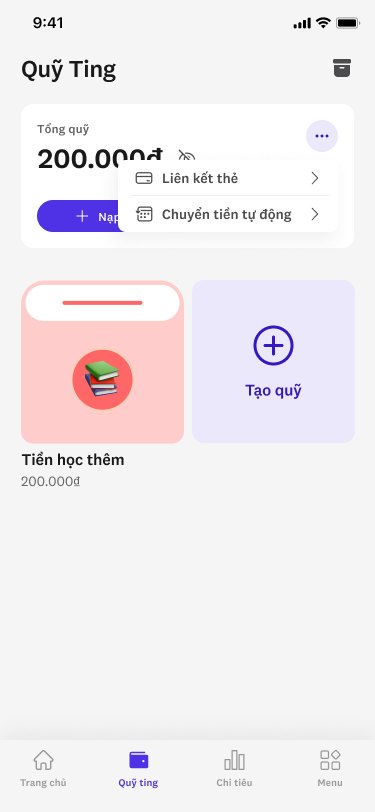
An original product screenExplore / play / keep going ↘
Concept, not shipped. Round-up is an extension the pot was designed to hold. The MVP shipped the pot, goals and transfer flows. Jump to what shipped
36
wallet payments a month
3.600đ
left over, on average
131.000đ
into the pot, a month
1.2
payments a day, through the wallet
About this illustration
A model of 2022, the year the work ran, not a record of Ting usage. 36 purchases over 30 days is 1.2 a day: only what runs through one wallet, not every purchase a person makes. It is anchored on Decision Lab's 2022 e-wallet frequency split and discounted because 61 per cent of users held two or more wallets. Spending is bracketed from GSO's 2022 living standards survey against 2022 wage-worker income. The 3.600đ average remainder is lower than the textbook 4.500đ because Vietnam prices on 9-endings and flat multiples of 10.000: 6 of these 36 payments round up to nothing at all. Working is in docs/ting-roundup-2022-benchmark.md.
One coffee
What it cost
35.000đ
What you paid
40.000đ
The difference
5.000đ
Into your pot
Nobody sets out to save 5.000đ. That is the whole point.
36 payments, one month
131.000₫
The sum of the small numbers below. Automatic after opt-in, in this concept.
- 5.000Grab
- 5.000Coffee
- 8.000Coffee
- 7.000Bill
- 5.000Cinema
- 2.000Banh mi
- 3.000Grab
- 1.000Grab
- 8.000Grab
- 6.000Shopee
- 5.000Coffee
- 7.000Grab
- 9.000Store
- 1.000Coffee
- 9.000Store
- 0Banh mi
- 4.000Store
- 0Milk tea
- 5.000Lunch
- 5.000Milk tea
- 5.000Milk tea
- 0Banh mi
- 0Cinema
- 1.000Grab
- 0Banh mi
- 7.000Store
- 0Phone
- 1.000Coffee
- 2.000Store
- 5.000Coffee
- 2.000Grab
- 1.000Coffee
- 2.000Store
- 7.000Grab
- 1.000Coffee
- 2.000Grab
The concept’s business logic
Spending stops being the enemy.
- 01
You spend
The thinking +
An ordinary payment. Coffee, a Grab ride, the electricity bill. No new habit, no new screen.
- 02
The wallet earns
The thinking +
The hypothesis: useful payment-linked saving could give people another reason to use the wallet for everyday purchases.
- 03
The remainder lands in a pot
The thinking +
In this concept, after opting in, each payment rounds to the next 10.000 and the difference moves into the pot.
- 04
Your balance grows, without leaving
The thinking +
The money you saved is still in the wallet. It sits in a pot with a name and a picture on it, waiting for something you actually want.
and then you spend again
The same month, twelve times
1.572.000₫
What one wallet could reach
131.000₫
1.2 payments a day, 3.600đ average remainder. The base case.
What every purchase would reach
337.500₫
2.5 a day, 4.500đ average. The ceiling, and out of reach for any one 2022 wallet.
Most savings products ask you to spend less. This one makes spending the engine.
02 / The product
What the person
actually does.
8 steps between opening the wallet and watching a jar fill. 6 of them shipped in the MVP. 2 are concept steps for the round-up mechanic, drawn in the same visual language so you can see exactly where the built product stops.
Tổng quỹ
0₫
Chưa có quỹ nào
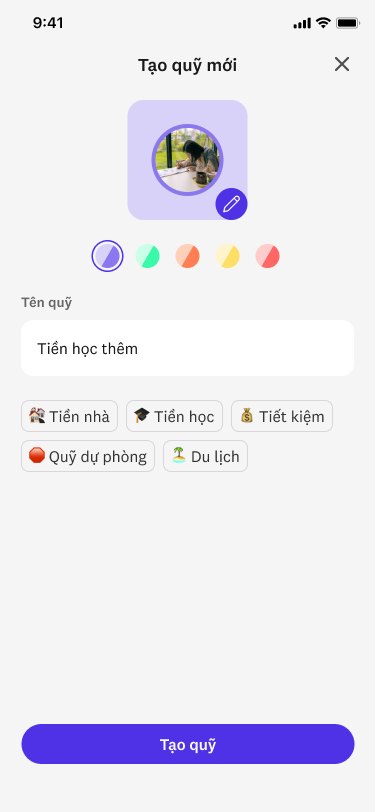
Tên quỹ
Du lịch Đà Lạt
Gợi ý
- Tiền nhà
- Tiền học
- Tiết kiệm
- Dự phòng
- Du lịch
Tạo quỹ
- 🏔
- 🎓
- 🛡
- 🏄
- 🚗
- 🎁
Xác nhận
0₫
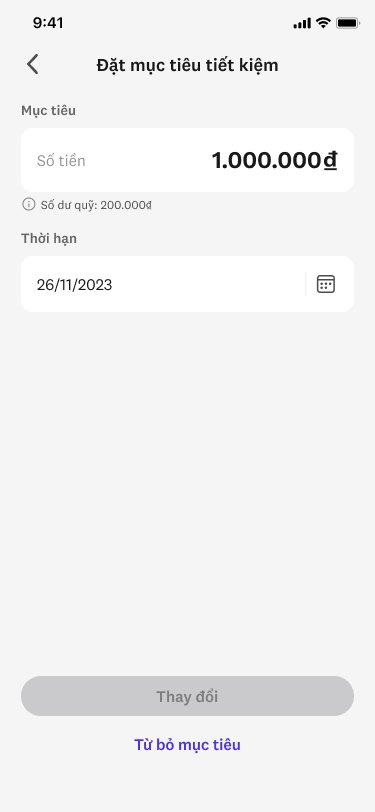
- Mục tiêu tiết kiệmĐặt
- Chuyển tiền tự độngĐặt
Số tiền
5.000.000₫
Thời hạn
31 / 12
Cần khoảng 417.000đ mỗi tháng
Lưu mục tiêu
Làm tròn mỗi thanh toán
Mỗi khoản chi được làm tròn lên 10.000 gần nhất. Phần lẻ vào quỹ.
- Bạn trả35.000đ
- Làm tròn40.000đ
- Vào quỹ+5.000đ
25.000₫
Hoạt động
- Grab55.000+5.000
- Coffee35.000+5.000
- Coffee32.000+8.000
- Bill213.000+7.000
Tổng quỹ
3.561.000₫
- 🏔3%Du lịch Đà Lạt131.000₫
- 🎓64%Tiền học thêm1.280.000₫
- 🛡43%Quỹ dự phòng2.150.000₫
Step 01 / 8 · shipped
Is this worth a tap at all?
The design decision +
A wallet with no pots is a wallet with one balance and no reason to come back. The empty state has one job: make naming a pot look like less work than it is.
Step 02 / 8 · shipped
What am I saving for?
The design decision +
A name, and five presets under it. The presets are there because a blank field is where most people quit. Naming the thing is the whole commitment, so it gets a screen to itself and nothing else shares it.
Step 03 / 8 · shipped
What does it look like on my shelf?
The design decision +
An emoji or a photo from the camera roll, plus a colour. This is what separates a pot from a bank sub-account. A picture of the thing you want is a reason not to raid it at the end of the month.
Step 04 / 8 · shipped
What can I do with this now?
The design decision +
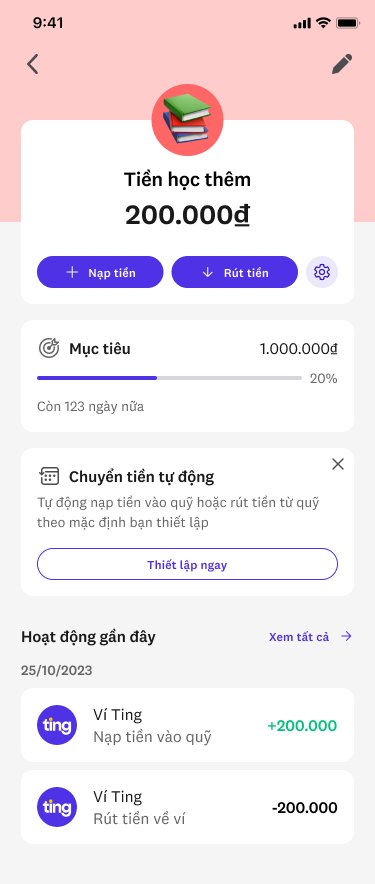
The pot is the hub. Balance at the top, the two things that fill it underneath, activity below that. Every screen after this one is reached from here, so nothing else competes for the top of it.
Step 05 / 8 · shipped
How much, and by when?
The design decision +
A target and a date, both optional. A goal is what turns a balance into a percentage, and the percentage is what makes the fill level on the shelf mean anything at a glance.
Step 06 / 8 · concept
Can I save without deciding to?
The design decision +
One switch. Every payment rounds up to the next 10.000 and the difference goes to the pot in the same second. This is the idea the pot was built to hold, and the part that did not ship in the MVP.
Step 07 / 8 · concept
Is anything actually happening?
The design decision +
The activity list stops being a ledger and becomes proof. Each ordinary payment arrives with its remainder attached, and the bar moves by a few thousand dong at a time.
Step 08 / 8 · shipped
Am I getting anywhere?
The design decision +
Every pot as a jar with a fill level and a face. One glance answers the only question a saver has, and the total sits above it for the people who would rather see the number.
03 / The business
Who pays for
a savings pot.
Three hypotheses behind the round-up concept. The numbers below come from the illustrative scenario; they are not measured retention, volume or revenue outcomes.
- 01
Volume
36
wallet payments a month, per pot holder
Explore the hypothesis +
A payment-linked saving mechanic could align product use with payment activity. Whether it increases transaction frequency would need testing beyond this concept.
- 02
Retention
1
named pot, half full
Explore the hypothesis +
A named goal and visible progress could create a reason to return. The MVP made those elements tangible; this case does not claim a measured retention uplift.
- 03
Balance that stays
131.000đ
a month, that does not leave for a bank
Explore the hypothesis +
The example keeps the saving inside a named pot. The product hypothesis is convenience: money already in the wallet could make a later payment easier. The simulated balance is not revenue or interest income.
And what it costs
The concept would need payment-triggered transfers, clear consent and cancellation, and reconciliation for every small movement. Those are requirements for a future implementation, beyond the Saving Pot MVP described here.
04 / The work
Wireframe to MVP.
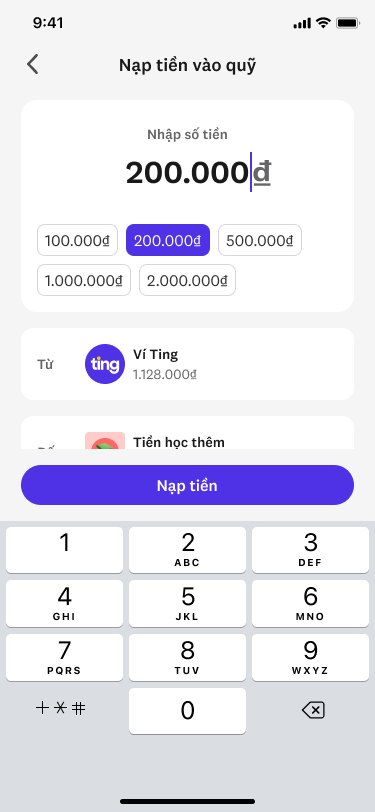
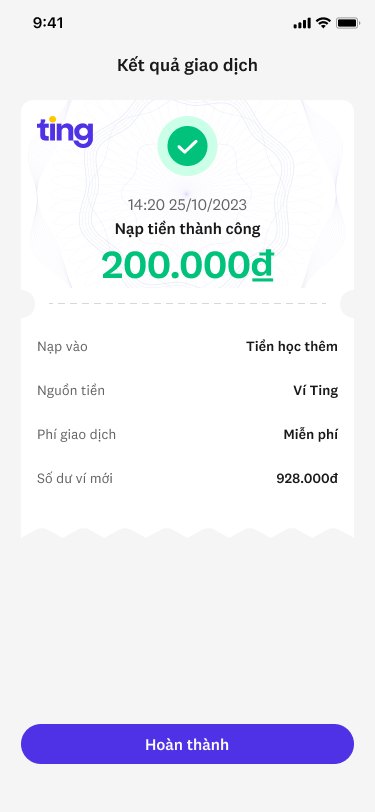
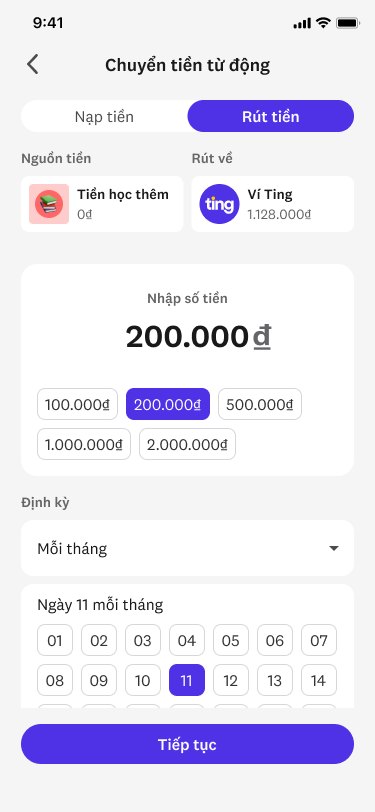
The screens above are redrawn in this site's four colours so they stay readable and so the two concept steps can sit in the same sequence. Below is what they were drawn from.


- My contribution
- Business Analyst: clarified flows and edge cases, produced wireframes and prototypes, and supported the team through MVP delivery.
- What I worked on
- Onboarding, creating and naming a pot, emoji and photo identity, goals and deadlines, scheduled transfers, top up and withdraw, and the receipt that closes each one.
- The hard part
- Keeping a sub-account from feeling like a second bank account. It had to read as a jar on a shelf, not a statement.